Predicting the aurora (in terms of timing, occurrence, and especially magnitude) is at best challenging and at worst, an educated guess. If it was easy, they would not call it a light ‘chase’. Similar to storm/tornado chasing you can forecast generally when there will be a higher likelihood of activity; but exact timing, magnitude, and bottom line ‘viewing’ conditions are very hard to predict. That said, the tools/resources listed and described below form the core of any serious aurora forecast and base chase plan. Goes without saying that no matter how well you plan, research, and forecast, be ready for plenty of surprises. After all, the not knowing exactly what each night has in store for you is part of the fun!
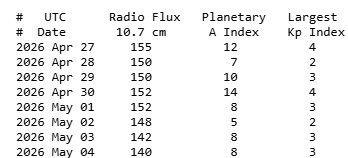
27-Day NOAA Aurora Forecast
Updated once per week (Late Sunday Night (ET)), this official NOAA outlook projects geomagnetic activity (Ap and Kp indices) across the coming 27 days — roughly one full solar rotation. Because coronal holes rotate with the sun and return at semi-predictable intervals, this is your best tool for identifying possible upcoming windows of elevated activity weeks in advance. Obviously not perfect as coronal holes expand, shrink, appear, and disappear; this is your best bet for any longer term planning. No CME impacts are included in this forecast (with the possible exception of the first couple days) as we only have 1-3 days advance notice of these events.
View on NOAA / SWPC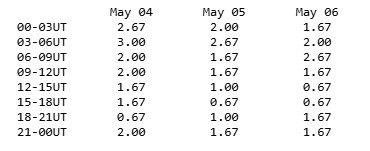
3-Day NOAA Aurora Forecast
The NOAA 3-day geomagnetic forecast is the go-to near-term planning tool, offering day-by-day predicted Kp index levels for the next 72 hours. This is the forecast most aurora chasers check in the days leading up to a potential event. If your schedule is flexible in the shorter term this is very useful as it would incorporate the latest solar wind data, incoming CME timings, and coronal hole stream arrivals — giving you the highest-resolution short-range outlook available from an official source. That said, even in this window, it is impossible to predict any Kp level/activity within 12-24 hours with a high degree of confidence.
View on NOAA / SWPC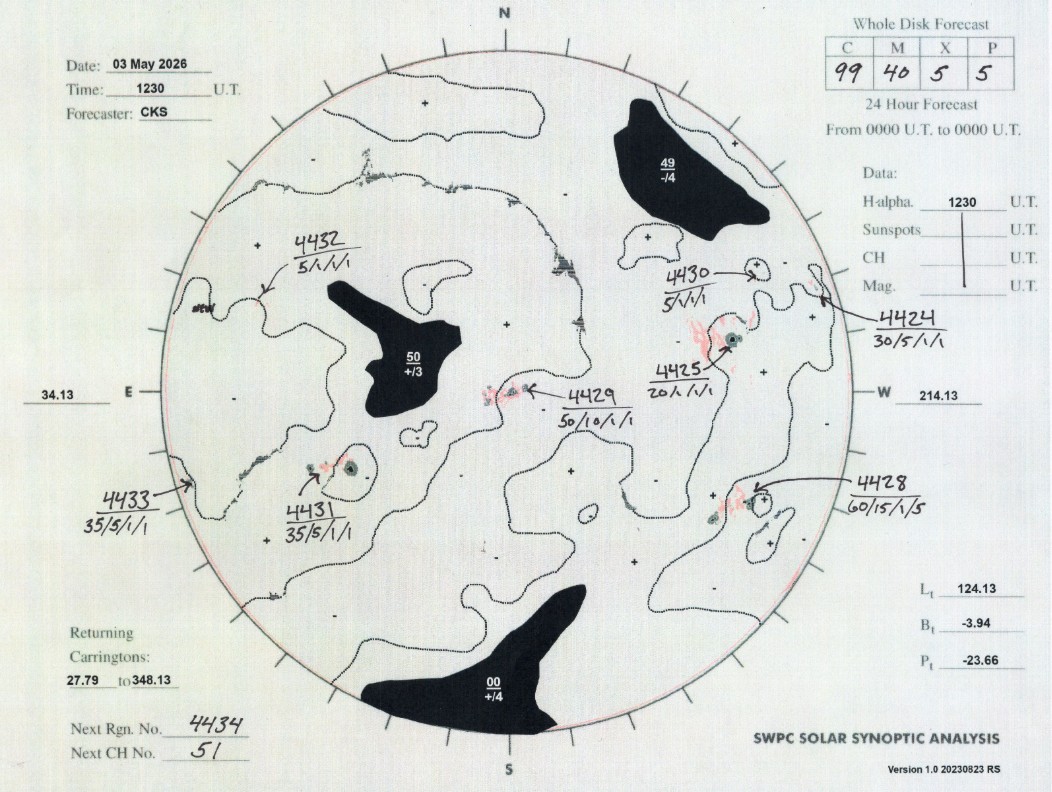
Rendering & Analysis of the Current Solar Disk
NOAA provides a daily updated annotated rendering of the solar disk, identifying and labeling active sunspot regions, coronal holes, and filaments in near real-time. Unlike a raw satellite image, this view overlays context — showing which regions are geoeffective (facing Earth), active, or rotating into view. This is one of the most useful daily tools for understanding what is happening on the sun and how it might translate to aurora activity in the coming days.
View on NOAA / SWPC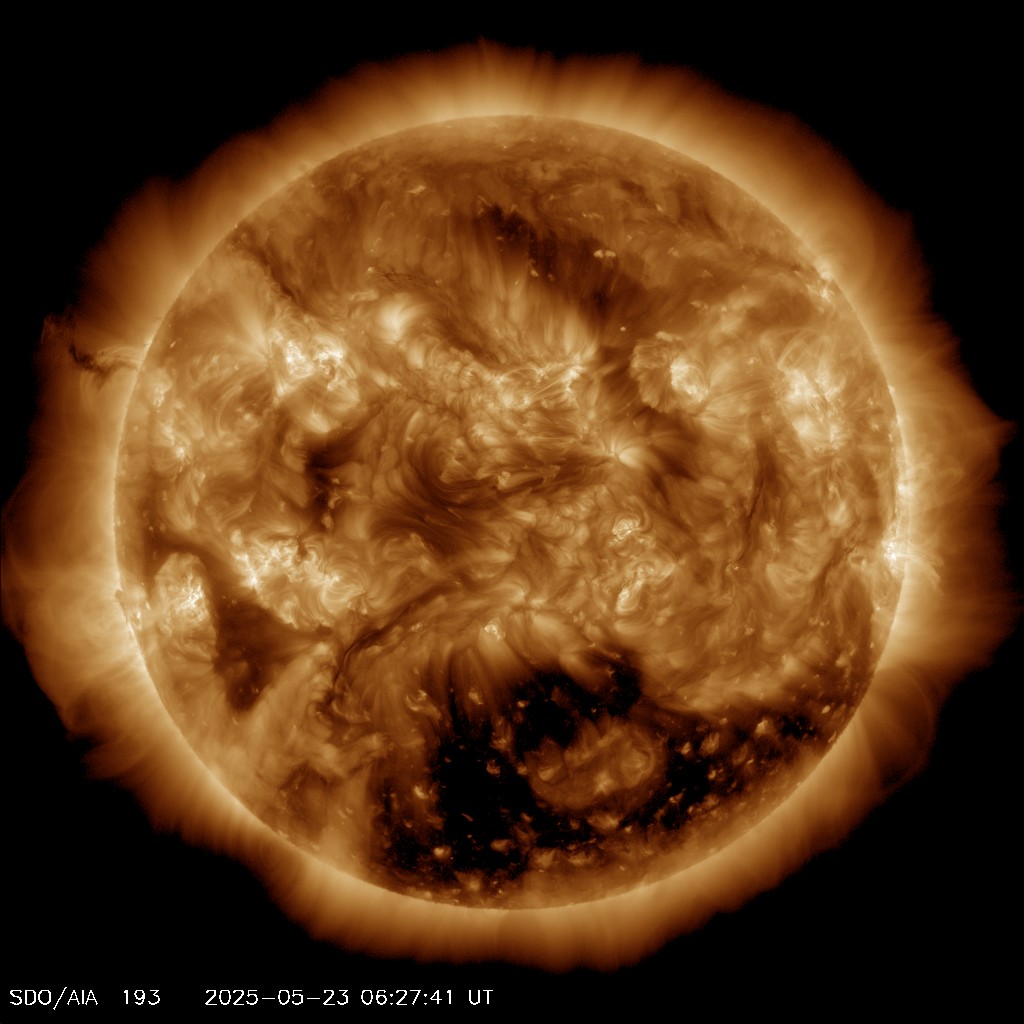
Photo of the Current Solar Disk
NASA’s Solar Dynamics Observatory (SDO) streams near real-time, high-resolution imagery of the sun across multiple wavelengths — updated every few minutes. The visible-light continuum image shows sunspot groups clearly, while extreme ultraviolet (EUV) views reveal coronal holes as dark regions on the disk. Cross-referencing the SDO imagery with the annotated NOAA rendering above gives you the most complete and current picture of solar conditions available to the public.
View on NASA SDOIt can take years to really get the hang of using the tools above (as it did for me), but repeated monitoring of these data points and then observing what actually happens, reveals some very useful patterns over time. In addition to a little luck, you will get a better sense of when to hop in the car, book a plane ticket, or catch up on some sleep. Many aurora enthusiasts/chasers have found the 1-hour personal concierge Zoom session with me (link below) very helpful before taking their trip; the small investment can pay big dividends come ‘show time’. Some important and helpful quick hits are below:
- In addition to predicting ‘space’ weather correctly, just as critical is predicting the earth weather for your viewing location. On my ‘helpful links’ page you will find some specialized weather links to help you.
- CMEs are some of the most exciting events for aurora chasers, but forecasting the exact timing (which can mean a lot) is notoriously hard. If a CME is forecast to impact Earth, I usually allow for 12 – 24 hours ‘cushion’ on either side of the forecast time for planning purposes.
- Coronal holes/winds are easier to predict in the long and short term vs. CME impacts. If there is a large enough coronal hole (clearly visible on the solar disk) facing earth and near the solar equator, chances are extremely high within 2 days the high solar winds will arrive and produce higher aurora activity.
- Even if the KP index is predicted perfectly, that is only one of many factors that ultimately dictate viewing conditions. The state of the BZ which is not known until real time can be a make or break, earth weather (clouds and/or winds) can be unpredictable, and other solar/space factors (particle density, etc.) can be important.
