One of the most common questions from first-time aurora viewers is why the lights look so much more dramatic in photographs than they do in person. The short answer is that camera sensors are far more sensitive to light/color than the human eye — particularly in low-light conditions. A long exposure photograph can accumulate light over several seconds, amplifying colors and structure that the eye simply cannot register at the same intensity. That said, the naked eye experience is simply breathtaking at higher activity levels. Even with lower/moderate conditions, the more muted lights/colors and varied formations rarely disappoint. What the camera cannot provide (but an in person experience can) is pure immersion in the moment and the dancing, movement, changing of shapes, and connection one feels when out on the chase. The comparison below gives you a realistic idea of what to expect.
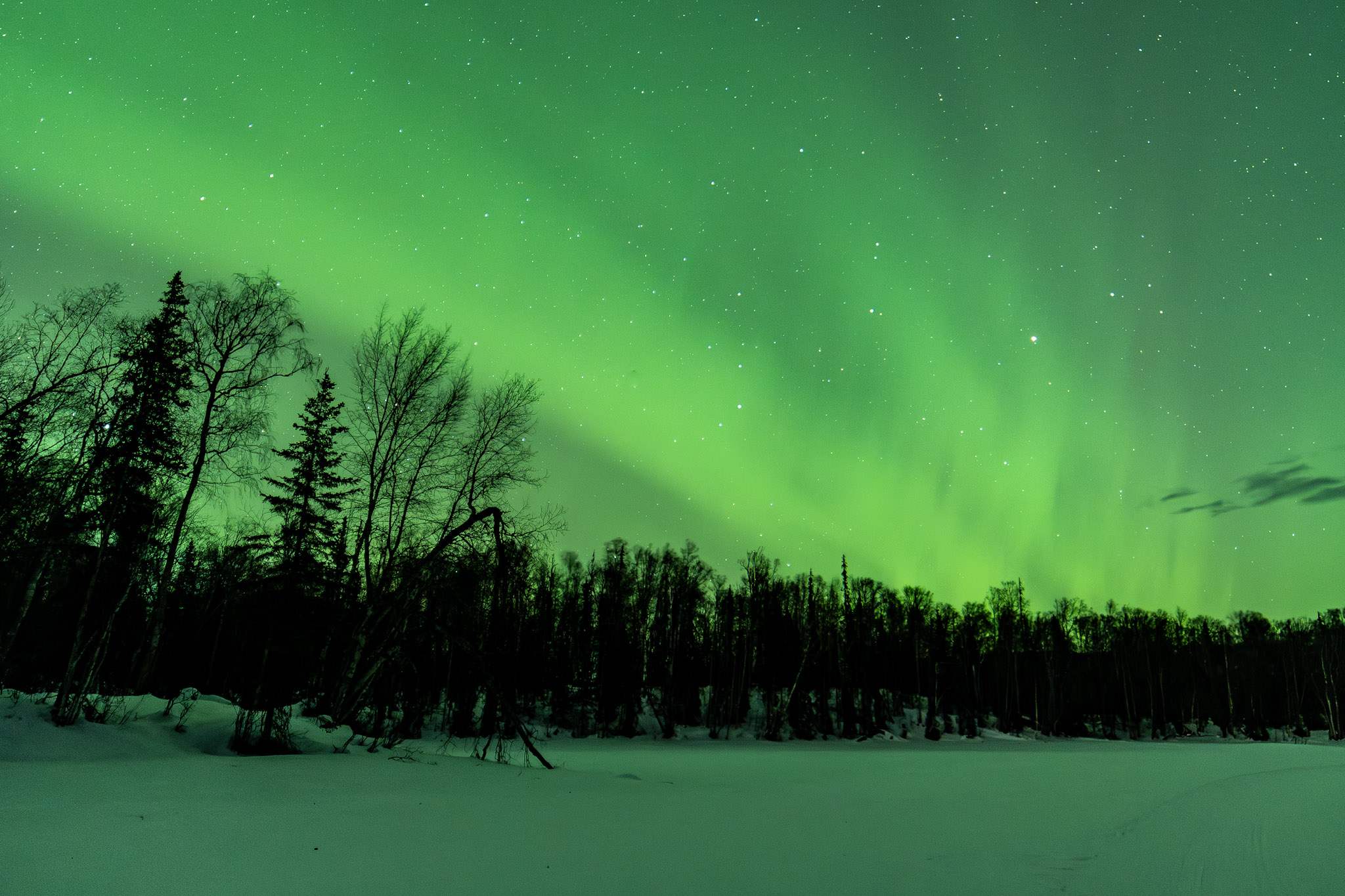
As the camera sees it
Long exposure, optimized settings, full dynamic range captured by the sensor.
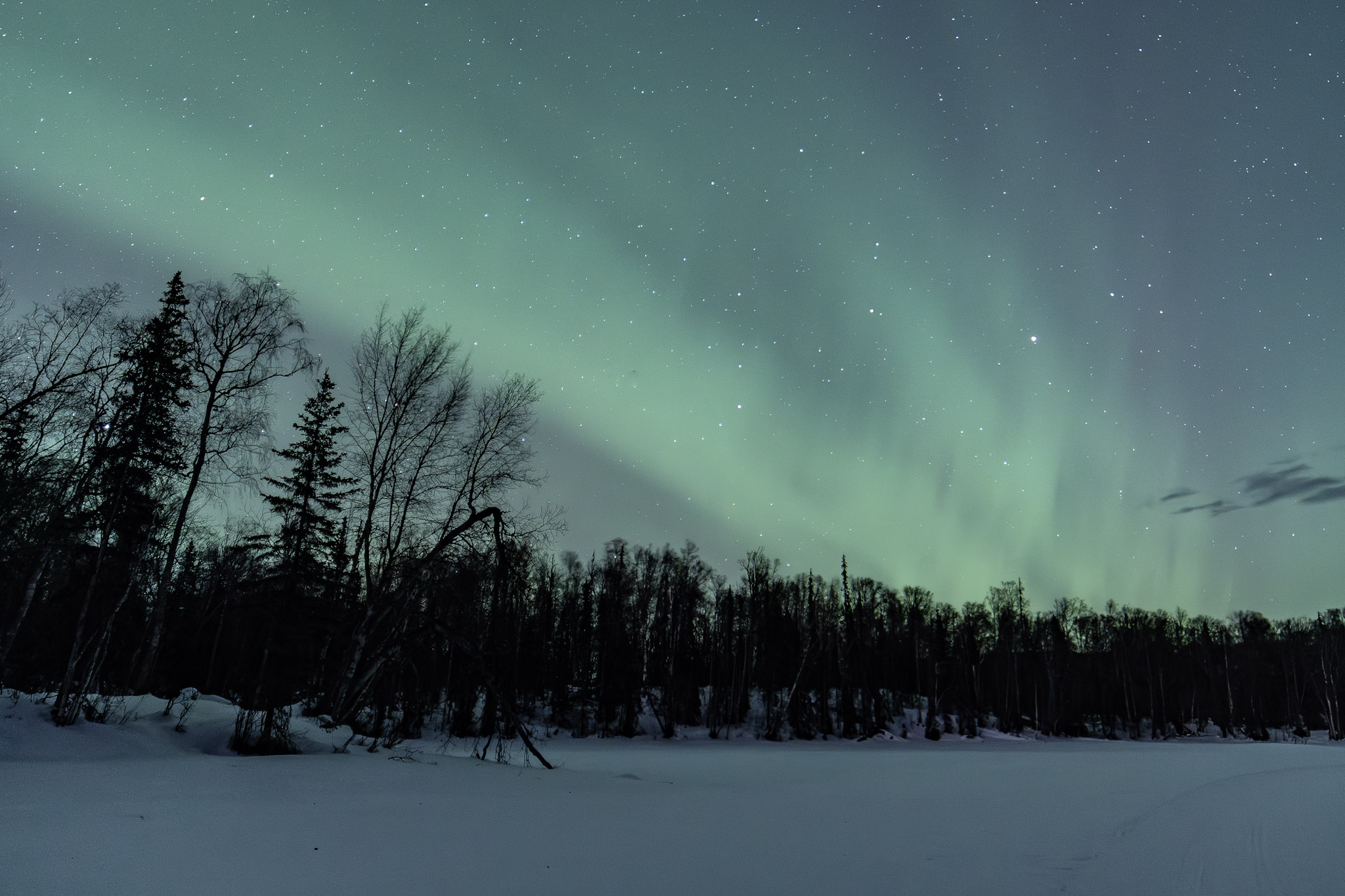
As the naked eye sees it
Dimmer, more muted tones — but still a remarkable sight, especially at higher activity levels.
