The aurora is visible most commonly in what is called the ‘auroral oval’ which is a zone around the magnetic north pole (which is different than 90N). This zone lies generally in the vicinity of 55N at its furthest south (Canada) to around 75N. Since there are almost no populated areas north of 70N, virtually all the best regions to see the northern lights rest between 55N and 70N. The most popular areas are Alaska, parts of Central/North Canada, Greenland, Iceland, and Northern Scandinavia. Below you will find maps and brief descriptions of each one of these areas.
In addition, I included broad zones within each region to show generally where the viewing is best and most challenged. Keep in mind, some of the areas that are marked as ‘poor’ would be great for actually viewing the aurora (top of a glacier in Iceland, middle of nowhere in Alaska), however I included accessibility as a factor in the zones. If it is almost impossible to physically get to a location, not a great place to view the lights! Within the zones the following were considered: (1) geographic relation to the auroral oval, (2) light pollution, (3) beauty of landscape/seascape, (4) accessibility (air and land), and (5) amenities within 1-2 hour drive. Using this as a general tool for broad zones to concentrate on you can then isolate specific spots you want to chase using Google Maps. Happy Chasing!
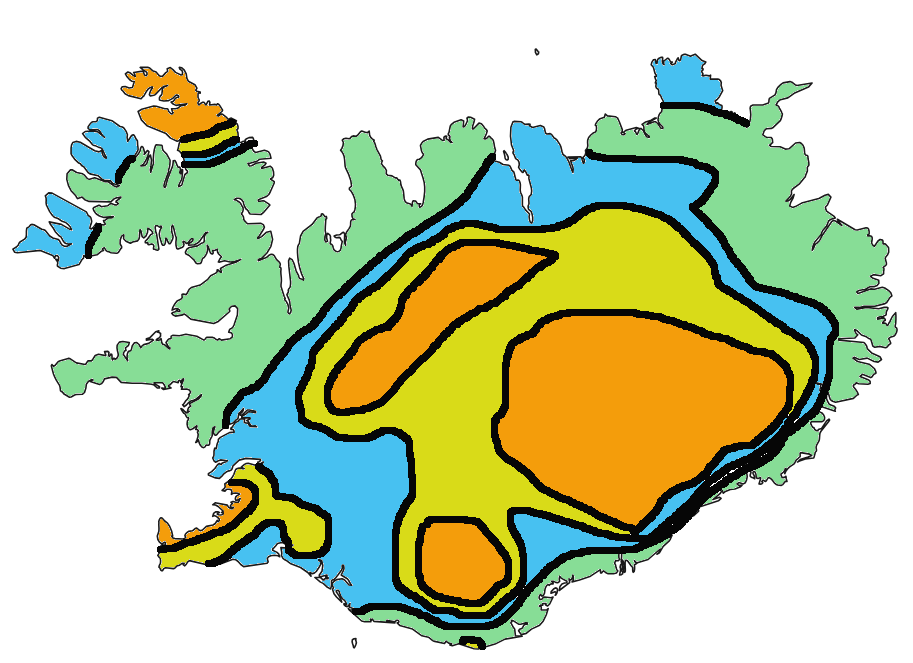
Iceland
Iceland sits squarely beneath the auroral oval, and despite its northern latitude, temperatures rarely get colder than 15F-20F in most coastal/lower elevation locations. This combined with relative ease of travel from the central/eastern United States and Europe along with spectacular and varied land/seascapes makes Iceland a premiere northern light destination. Challenges include frequent cloudy skies/storms, high winds, and high local expenses.
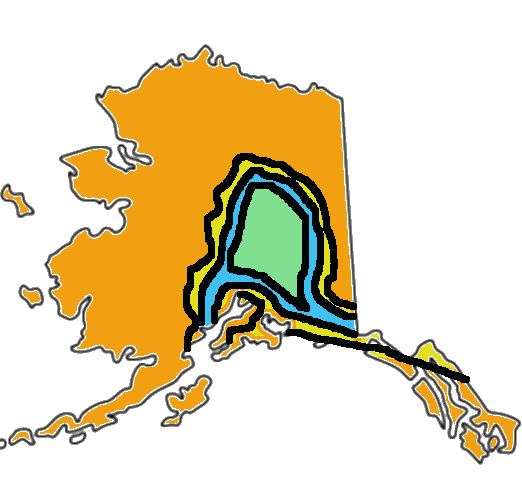
Alaska
Alaska is another top destination for aurora viewing and photography with most of the state positioned within the auroral oval. This US state offers relatively easy access for western US/Canadian travelers, more clear skies on average (especially interior regions) than other highlighted destinations, vast wilderness, and varied/beautiful landscapes. Challenges include limited accessibility to much of the state, vast distances between populated areas, occasional high winds (especially in the south), and deep snow/extreme cold in winter.
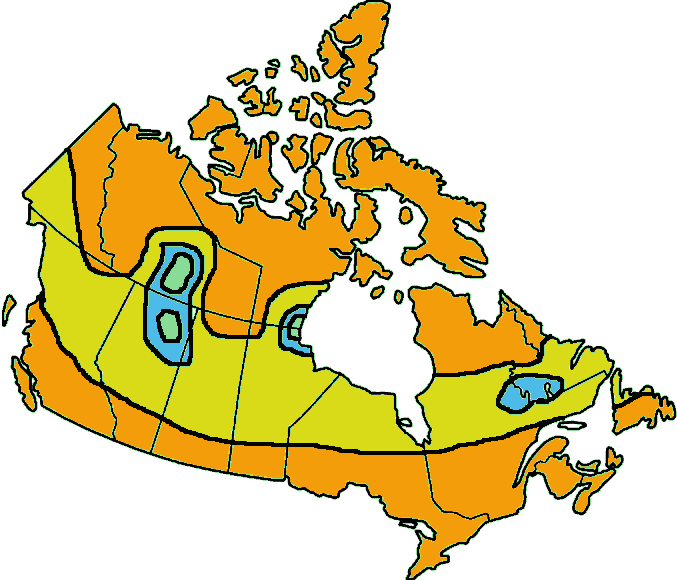
Canada
Canada offers vast stretches of pristine wilderness beneath the auroral oval. Similar to Alaska, Canada offers almost endless territory, but the vast majority is very hard or essentially impossible to access via roads or airports. The southern parts of the country that border the USA are populated and very easy to visit, but these areas are too far south to see the lights on a consistent basis. The rare combination of auroral oval locations and relatively easy access would be confined to Yellowknife- NW territories, Fort McMurray-Alberta, Churchill-Manitoba, and the areas around these locations. Although south of the official oval (and therefore needing active conditions), the Banff Area (just west of Calgary) gets an honorable mention due to gorgeous landscapes.
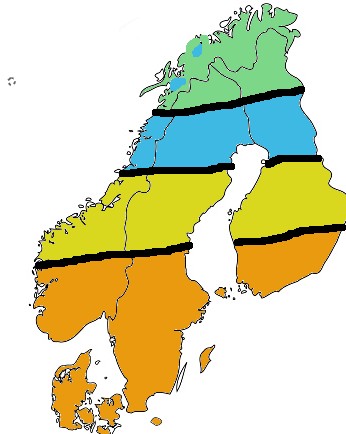
Scandinavia + Finland
Scandinavia and Finland together form one of the most accessible and reliable aurora viewing regions in the world. Unlike Alaska and Canada with most of those regions out of reach, the central and northern sections of these countries are fairly populated and well connected with roads, amenities, and airports. The main obstacles (other than weather) would be latitude and light pollution. Outside of greater Tromso, Bodo, and few other town/city centers, light pollution is reasonable (or low) and the scenery stunning along the coast. The coastal areas are more mild in the winter, however storms and cloudy skies are extremely common. Inland (where many aurora tours venture), tend to offer clearer skies (and colder temperatures).
Can you see the northern lights in the USA?
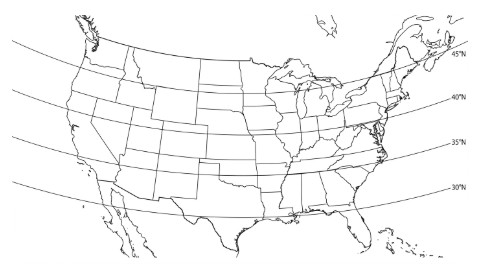
So, you might be thinking, chasing in polar/arctic regions sounds like a lot of work (and you would not be wrong), can I just look out my window and see the lights if I live in the continental US? Complicated answer, and will try to give you a brief overview using the map below to explain. For a much more detailed guide, you can purchase my PDF light chasing guide or book here (book link).
- South of 30°N: Enjoy the warm winter weather at home and start planning a full chase if you want to see the lights. Approximately 2-4 times a decade near 30N there is some ‘subtle’ form of aurora visible away from light pollution and on the northern horizon. However if possible, book your plane tickets to one of the regions mentioned above!
- 30°N – 35°N: Similar overall idea as south of 30N, with a kicker. Although still only visible a handful of times per decade, the shows can be more impressive (again on the northern horizon and away for light pollution). If there is a severe/extreme solar storm forecasted (KP 8/9) get your gear ready and head out, but outside of that, Expedia is calling.
- 35°N – 40°N: “So, you telling me there’s a chance”…as the famous quote goes. In this zone, although seeing aurora remains very rare, it does occur. Here (especially near 40N), some form of light activity can be seen roughly 1-3 times per year. Northern horizon with minimal light pollution is still essential, but if KP6/KP7 or higher is the forecast, worth getting the batteries charged.
- 40°N – 45°N: Now we start getting serious. Once north of 40N and especially towards 45N, lights although not ‘common’ are not rare either. On average in this zone, sightings range from 2-4 times per year near the southern border to a couple times per month near 45N. Again, most of these will be more ‘subtle’ and in the northern 3rd of the sky, but if there is KP5/kp6 forecasted (especially with other favorable metrics), get out there! If there is a severe/extreme storm forecast, light shows in this region can rival the shows seen in the regions highlighted above with brilliant colors, movement, and overhead displays.
- 45°N – 50°N: When at the border regions of Canada (49N once west of the great lakes) some form of aurora activity occurs on a semi-regular basis. Not in the auroral oval by any means, but there is some form of activity seen several times per month on average. Even a KP of 3/4 with other favorable metrics can produce northern sky/horizon activity and once to KP5+, usually a good show is in store. Anything at or above a KP6, the show can be comparable to ‘northern light destination’ locations. That said I would not do a dedicated chase this far south, although if in the area anyway, would certainly bring my gear.
Other regions of the world
- Europe: Mainland Europe is similar to the USA in terms of viewing with one large caveat. Since the magnetic north pole is closer to North America (and away from Europe) you have to shift all latitude benchmarks for the USA by about 10 degrees north to get the same result in Europe. For example NYC sits just above 40N, however for a similar chance at viewing the lights in Europe (ignoring Times Square light pollution) you would have to be close to 50N locations in Europe (Northern Germany, Poland, Northern England, and Ireland).
- Greenland: Greenland certainly sits right in the auroral oval with virtually no light pollution away from a few town centers. However with 99% of the territory not accessible by road or air, viewing locations are very limited with almost no mobility outside of the immediate town centers. That said, for a change of pace, visits here can be rewarding with excellent ice/seascapes and fjords within the prime auroral oval location.
- New Zealand/Australia: No chance at seeing the northern lights, full stop. But…sometimes they can experience the ‘southern lights’ or aurora australis. Chances and frequency of seeing the aurora here is roughly the same as the northern tier of the USA. So again, would never do a dedicated chase here as chances are slim, but yeah, probably would be ready just in case if I was here anyway on vacation.
For much more detailed information on each region (and northern US states); along with essential tips on all aspects of viewing, chasing, and photographing the aurora, purchase my PDF chase guide or physical book here
